Friday, December 3, 2010

J-14 (Magazine)

J-14 (Magazine) Published since: 2000. Publisher: Bauer Media Group. ASIN: B00005OM4W.

Plot summary
: This monthly publication is aimed at teen girls and includes information about celebrities popular with teens, articles about fashion, makeup, friendship and romance, as well as tear-out posters of celebs. Also featured regularly in the magazine are quizzes for readers to take with their friends. The bulk of the magazine is photographs of celebrities, and most of the information about these celebs is similar to that found in a tabloid magazine (gossip, he-said-she-said, etc.) The celebrities featured in the magazine usually do not change from issue to issue, but do shift as new celebs enter the pop-culture field of vision. Typical celebrities to be featured in J-14 currently are Justin Bieber, Taylor Swift, Miley Cyrus, Taylor Lautner, Robert Pattinson, Kristin Stewart, Demi Lovato, Selena Gomez and the Jonas Brothers.

Critical evaluation: Although the magazine is wildly popular with teen girls, J-14 (which stands for “just for teens”) has little to offer in terms of education or realism beyond a typical supermarket tabloid. The bulk of the magazine is images and posters of celebrities. These celebrities typically do not change from issue to issue, so if a teen is interested in celebs other than the “typical” teen heartthrobs, J-14 will not appeal to them. The majority of the “information” about these celebrities that is included in the magazine is essentially un-substantiated gossip. Typical cover stories include things like “Why Miley called the cops,” “Zac’s dirty secret” and “The real story behind Justin’s backseat kiss.” Most of the information in these articles is clearly concocted for even the mildly discerning reader, and acts more as an excuse for a large photo of the celeb rather than for a truthful telling of the facts. The articles about fashion, friendship and romance are little better. They lack the heart of other teen magazines like Seventeen or Teen Vogue, and seem to be more filler than informative. Despite these shortcomings, however, J-14 will still be incredibly appealing for teens. The photos and articles make for entertaining and light fun, and can also be used as decorations (all issues include at least one tear-out poster.) The magazine is the literary equivalent of a tall glass of soda, but teens are certainly going to continue to drink it up, issue after issue.

Reader's annotation: This magazine features tons of celeb photos, interviews and gossip as well as articles about fashion, makeup, friendships and romance.   

About the publisher: Founded in 1875 in Hamburg, Germany by Johann Bauer, the Bauer Media Group now operates in fourteen countries and publishes 308 magazines. Bauer Publishing began doing business in the United States market in 1981 with the magazine Woman’s World. Bauer US now publishes nine magazines in the United States: InTouch Weekly, Life & Style Weekly, J-14, Twist, M, ASTROgirl/QuizFest, Life Story, First, Woman’s World and Soaps in Depth. In addition to magazines, the Bauer Media Group also owns TV and radio stations throughout Europe. Apart from Germany, the Bauer Media Group has the most market activity in the United Kingdom. (http://www.bauerpublishing.com/about/about_home.html#)

Genre: Magazine

Curriculum ties:
None

Booktalking ideas:
Importance of celebrities in daily life
Impact of magazines on lives of teenagers
Influence of pop culture icons on society

Reading level/Interest Age:
Grade 6 and up

Challenge issues:
None

Reasons for inclusion:
Widely selling magazine for teens, published for ten years.

Shonen Jump (Magazine)

Shonen Jump (Magazine) Published since: 2002. Creator: Based on magazine Weekly Shōnen Jump in Japan. Publisher: VIZ Media, LLC. ISSN: 15457818.

Plot summary
: Based on the Japanese magazine Weekly Shōnen Jump, this monthly publication features chapters from the most popular comics in the Japanese magazine, as well as artist interviews, information on card and video games, toys and anime. Current manga series to be featured in Shonen Jump include Bleach, Karakuridôji Ultimo, Naruto, One Piece, Psyren, and Yu-Gi-Oh!. The magazine has also featured other popular manga series that have now ended, such as Hikaru no Go, Slam Dunk, Tegami Beach and YuYu Hakusho. All of these series have their own creators, illustrators and plots, making Shonen Jump an almost anthology of manga titles. In addition to these professional manga series, the magazine also includes fan art submitted by readers. A recent issue included the results of a fan-made cover art contest. Throughout the year, several issues of Shonen Jump are considered “special editions” and include posters, details and specific information about certain series, and color illustrations (regular issues are printed in black and white.) Most issues of the magazine are over 300 pages in length, with special editions being even longer. In addition to the print magazine, VIZ Media also maintains an in-depth website for readers (shonenjump.viz.com) that offers downloads, games, wallpapers and more.

Critical evaluation: Although it has been published in the United States for less than ten years, Shonen Jump has become one of the most popular magazines for teens in the country. This can most likely be attributed to the fact that it is a very lengthy publication that appeals to teens who are manga enthusiasts, which quite a few are. Not only does the magazine contain actual chapters of manga stories, it also includes fun and interesting articles about Japanese culture, manga authors and illustrators, video and card games, and toys. It’s a virtual treasure trove of stories and information for manga-lovers. The main appeal of the magazine are the manga series included each month. The current series
Bleach, Karakuridôji Ultimo, Naruto, One Piece, Psyren, and Yu-Gi-Oh!, all have interesting storylines and graphics. Many of the stories have very whimsical settings and characters, like One Piece which is about fictional land covered by oceans separated into regions by a large mountain range. In Psyren, the main character is a high school student who is chosen to play in an unsettling game called “Psyren” and discovers that while playing the game, he is actually travelling ten years into the future. Stories like these will appeal to readers who like adventure and fantasy, and they are also wonderfully illustrated. With each chapter published monthly, the stories build upon themselves, drawing readers back to go through each issue. By leaving readers in suspense, the publishers of Shonen Jump have created an entertaining magazine for teens that will appeal to manga lovers.

Reader's annotation: This monthly publication includes chapters from popular manga series as well as author and illustrator interviews, information about Japanese culture, reviews of video and card games and toys. Also featuring previews of upcoming manga series.  

About the publisher: Founded in San Francisco in 1986 by Japan-native Seiji Horibuchi, Viz Media (formerly Viz Communication) has been publishing manga in various forms ever since. In the late 1980’s and early 1990’s, business and sales were somewhat slow for the company. Some of the earliest titles released included Legend of Kamui and Ranma ½. In order for their titles to be sold in mainstream bookstores, Viz Communication referred to them as “graphic novels” instead of manga. In recent years, the company merged with Japanese publishers Shueisha Inc. and Shogakukan Inc., expanding business further. Now, Viz Media is the leading publisher and distributor of Japanese manga for the English speaking audience in North America, the United Kingdom, Ireland and South Africa. The company publishes several manga magazines including Shonen Jump, Shojo Beat and Shonen Jump Advanced. They have also licensed and distributed many popular anime on DVD including series like Bleach, Death Note, InuYasha, Naruto, Ranma ½, Vampire Knight and Sonic X. One unique feature of manga published by Viz Media is that they have created “manga ratings” (similar to MPAA ratings for movies) that act as a guide for parents when selecting manga for their children to read. Viz Media is headquartered in San Francisco, California. (http://www.vizmedia.com/about/)

Genre: Magazine

Curriculum ties:
Art/illustration
Japanese culture

Booktalking ideas:
Booktalk individual series each month
Discuss popularity of manga and impact on society
Creating graphic novels (plot and illustrations)

Reading level/Interest Age:
Grade 7 and up

Challenge issues:
Violence
Some sexuality

Challenge counterpoints:Recommended for grades 7 and up.
Recommend parent read through magazine before child.
Recommend parent read magazine with child.  
Recommend parent look for manga ratings of each chapter and determine which are appropriate for child.


Reasons for inclusion:
Most popular and best-selling manga magazine in the United States.  

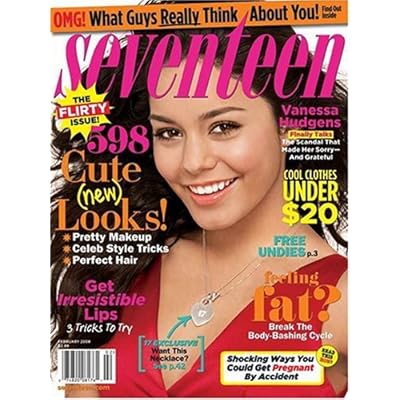
Seventeen (Magazine)

Seventeen (Magazine) Published since: 1944. Creator: Walter Annenberg. Publisher: Hearst Corporation. ISSN: 0037301X.

Plot summary
: One of the longest running teen magazines in the United States, Seventeen features information about fashion, beauty, romance, health, relationships and celebrities for teen girls. The cover of each issue typically features a popular female celebrity with a corresponding interview inside. Recently celebrities featured include Ke$ha, Rachel Bilson, Vanessa Hudgens, Rihanna, Carried Underwood, and Ashlee Simpson. Celeb interviews cover information about their lives, what they were like at age seventeen, and other topics important to teen girls. One of Seventeen’s most popular and well-known features are their quizzes. Issues feature several quizzes for readers to complete, with titles like “How should you do your makeup for school?” and “How organized are you?” These quizzes are also available on the online version of the magazine, www.seventeen.com. Another popular portion of the magazine is the monthly section entitled “traumarama.” This section allows readers to submit their embarrassing stories for other teens to read and laugh at. Apart from these pieces that are meant for entertainment, Seventeen often includes articles about teens that have overcome or had to deal with a serious problem in their life. Stories from teens that have experienced date rape, been diagnosed with a terminal illness, or had an eating disorder are examples of these types of articles. In addition to these more narrative articles, Seventeen has features on fashion and makeup trends that correspond to the month of each issue. There are typically four issues per year that have larger fashion features as each season draws near (i.e. spring fashion, back-to-school trends, etc.)

Critical evaluation: Seventeen magazine stands out as one of the most well-known magazines for teen girls in the history of publishing in the United States, most likely because it has been in publication for over 65 years. It’s safe to say that the majority of teen girls have at least glanced through a Seventeen at one time or another, even though it is aimed towards the “typical” teenage girl. The magazine itself is quite formulaic, usually having a similar layout of stories and features, but is still quite entertaining to read. The editors do a good job of featuring the most popular female stars on the cover that will appeal to teenage girls. Indeed, the entire magazine is designed to appeal to girls: from color and font choice to wording. This does, unfortunately, make the magazine virtually useless for the majority of teenage boys, but there are certainly some who may be interested in reading it as well. The quizzes and “traumarama” sections of the magazine are some of the most entertaining and appealing. Teens will enjoy reading through these items together, comparing quiz responses and discussing results. Seventeen does a great job of creating something that can be enjoyed by a group of teens, a unique feature of a print resource. One of the most useful and educational sections of the magazine are the “serious” articles that highlight a teen that has experienced an issues affecting teens. These articles provide insight into the issue, and are usually highly relatable for readers. Typically, the end of these articles provides resources for helping readers or their friends if they are experiencing similar problems (i.e. hotlines, websites, community organizations.) The success of Seventeen is certainly no wonder as it is an entertaining, fun, appealing and informative magazine for teens.

Reader's annotation: Seventeen provides the most up-to-date information about celebs, fashion, makeup, relationships, romance and health. Features include quizzes, “traumarama,” interviews, and fashion tips.
About the publisher: Founded in March of 1887 by William Randolph Hearst, the Hearst Corporation has been one of America’s largest diversified media companies for over 120 years. The Hearst Corporation owns fifteen daily newspapers including the Houston Chronicle, San Francisco Chronicle, The Advocate, Greenwich Time, and the Connecticut Post. They also publish over 200 magazines around the world, including some of the most popular in the United States like Cosmopolitan, Good Housekeeping, Esquire, Harper’s Bazaar, Marie Claire, O: The Oprah Magazine, Seventeen, and Town & Country. Hearst owns 29 television stations as well, such as A&E and ESPN. The current CEO, Frank A. Bennack, Jr., has served as the CEO of the Hearst Corporation for 23 years. In addition, each subsidiary of the corporation, like the newspaper division, magazine division, etc., has its own president. After William Randolph Hearst’s death in 1951, a board of thirteen trustees was established to administer the Hearst Foundation. This board of trustees selects the eighteen member executive board of the Hearst Corporation, and includes five Hearst family members and eight outsiders. The Hearst Corporation is headquartered in the Hearst Tower in New York City. (http://www.hearst.com/about-hearst/index.php)
Genre: Magazine

Curriculum ties:
None

Booktalking ideas:
How magazines affect the daily lives of teens
Accuracy of magazine in depicting interests of teens
Do magazines appeal to all teens or just some?

Reading level/Interest Age:
Grade 7 and up

Challenge issues:
Romance/some sexuality
Includes images of thin girls (encouraging girls to be thin)

Challenge counterpoints:Recommended for grades 7 and up.
Recommend parent read through magazine before child.
Recommend parent read magazine with child.  
Recommend parent discuss body image with child.


Reasons for inclusion:
Magazine has been published for more than sixty-five years.

Thursday, December 2, 2010

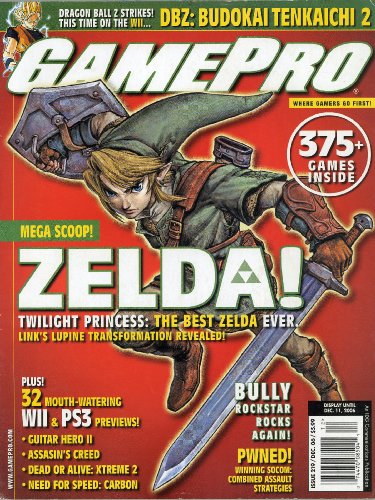
GamePro (Magazine)

GamePro (Magazine) Published since: 1989. Creators: Patrick Ferrell, Leeanne McDermott, Michael Kavish, Lynne Kavish. Publisher: IDG Communications. ISSN: 10428658.

Plot summary
: This long running magazine includes information about various video games and gaming hardware for consoles, PC and handheld devices. Typical issues include previews for upcoming games, news about gaming companies or events, and ratings and reviews of recently released games. GamePro also offers gaming tips for readers including screenshots of games and cheat codes. One aspect of the magazine that is unusual is that editors, writers and contributors always go by humorous monikers. Some of these pennames include “Boba Fatt,” “Dr. Mario,” “Lawrence of Arcadia,” and “Vicious Sid.” The magazine uses a give star rating system when reviewing recently released games with one star being the lowest and five the highest. An Editor’s Choice Award is given to games that earn four and a half or more stars. In 1998 Gamepro.com was created, and the majority of the magazine’s contents are now available for viewing online.

Critical evaluation: Since its creation over twenty years ago, GamePro has been consistently providing fun, interesting and useful information for both teen and adult video gaming enthusiasts. Previews of upcoming games and gaming devices are timely and informative. The magazine also includes colorful and enticing illustrations. Screenshots are typically large and provide a good look at what players can expect from games in terms of graphics. The editors also include useful information about gameplay, including tips, tricks and cheat codes. One of the best parts of the magazine is the humor the editors include in their articles and reviews. Gamer jokes and good-natured sarcasm add to the enjoyment of reading about new gaming products. The reviews provided by GamePro are very useful for both teens and adults in making decisions about which games or hardware to purchase. In addition to the print information, Gamepro.com also provides a lot of content that gaming enthusiasts can appreciate. One of the most informative features is the “buyers beware” section that warns gamers about poor games or companies that don’t provide good customer service or support. Overall, GamePro is an entertaining and helpful magazine for teens and adults alike.

Reader's annotation: Interested in video games? GamePro provides fun, entertaining and useful information for gamers of all ages.

About the publisher: International Data Group (IDG) was founded in 1964 in Newtonville, Massachusetts by Patrick Joseph McGovern and Fred Kirch. The company is now headquartered in Boston, Massachusetts and publishes over 200 magazines and newspapers in over 85 countries. They also publish 460 websites. Overall, IDG serves about 270 million customers through its publications, and are valued at $3.05 billion. With all of its success and revenues, IDG founded the McGovern Institute for Brain Research in November of 2005. Some of IDG’s publications in the United States include CIO Magazine, Computerworld, GamePro, Network World and Taste for Life. (http://www.idg.com/www/HomeNew.nsf/docs/about_IDG)

Genre: Magazine

Curriculum ties:
None

Booktalking ideas:
Influence of gaming on society
Influence of specific games on pop-culture
Balancing gaming with other activities

Reading level/Interest Age:
Grade 7 and up

Challenge issues:
Language

Challenge counterpoints:Recommended for grades 7 and up.
Recommend parent read through magazine before child.
Recommend parent read magazine with child.  


Reasons for inclusion:
Magazine has been published for more than twenty years.

Wednesday, December 1, 2010

Catching Fire (Novel)

Catching Fire (Novel) Release date: 2009. Author: Suzanne Collins. Publisher: Scholastic Press. ISBN: 9780439023498.
File:Catching fire.JPG

Plot summary
: This second novel in the Hunger Games trilogy picks up directly where the plot of the first left off. Katniss and Peeta have won the Hunger Games, but their win is shrouded in uncertainty. A visit from President Snow confirms that the Capitol is angry at the way in which the games were won: by defying the Capitol’s last minute decision to allow only one winner through Katniss and Peeta threatening to commit suicide. Now Katniss must convince Panem that she is lovesick for Peeta, despite the fact that she has feelings for Gale. As the victory tour commences, Katniss and Peeta sense that there is unrest in Panem. After a particularly emotional visit to District 11, home of Katniss’ ally Rue from the first novel, an elderly man is shot and killed for whistling Rue’s tune during Katniss’ speech. Unsure of what their future holds, Katniss and Peeta are shocked when the Capitol announces the rules for the next Hunger Games. It is to be a Quarter Quell, a Games that occurs every 25 years, and this time victors will be pitted against one another in the ultimate test of survival. As the only girl victor from District 12, Katniss will be forced to participate in the event that she barely survived the first time.

Critical evaluation: Although any story would be hard-pressed to top Suzanne Collins’ masterpiece The Hunger Games, the second novel in the series, Catching Fire, manages to compete with its predecessor quite admirably. The suspense of the first novel’s climax is picked right up as Katniss and Peeta embark on life as victors. Although they were promised luxury and comfort, they are instead met with fear, distrust and uncertainty. Collins does a remarkable job of allowing the reader to experience the tension in their journey through Panem. It begins as uncomfortable than becomes borderline dangerous as violence begins to suddenly erupt. The reader is also given a better introduction of President Snow, the mastermind behind the Hunger Games and ruler of the Capitol. Collins creates her villain quite well, giving him a creepy almost pedophilic nature that is sure to unnerve the reader as it does Katniss. The action of the first novel is also continued in the Quarter Quell Hunger Games. The arena of the new games is even more brutal than what Katniss and Peeta originally faced, but is made somewhat more easy to bear with the introduction of several lovable players. The stand-out character in the second novel is Finnick Odair, a winner from District 4 who is a lothario but also a skilled competitor. Johanna Mason is another interesting character, a victor from District 7 who is complicated and dangerous. In Catching Fire, Collins does an outstanding job of maintaining the excellence of her first novel while furthering the story. The novel, and the entire series, will appeal to adults and teens alike.

Reader's annotation: Katniss Everdeen and Peeta Mellark have survived the Hunger Games, but will they survive the victory tour? When President Snow pays a visit to Katniss, informing her that the Capitol is none too pleased with how she won the Hunger Games, she fears for the safety of those she holds most dear.

About the author: Suzanne Collins began her writing career in 1991, writing for children’s television. She was on staff for several popular Nickelodeon shows such as Clarissa Explains it All and The Mystery Files of Shelby Woo. She also wrote for programs on different networks, including Little Bear, Oswald, and Clifford’s Puppy Days. In 2003, Collins released her first children’s novel, Gregor the Overlander. This book was the first in the Underland Chronicles series for which she wrote five more books by 2007. In 2008, Collins published The Hunger Games, the first in her best-selling trilogy. The sequel to The Hunger Games, Catching Fire, was published in 2009 and the final book in the trilogy, Mockingjay, was released in August 2010. Since their release, the first two novels of The Hunger Games trilogy have sold over 1.5 million copies in North America alone. The film rights for The Hunger Games have been purchased by Lions Gate Entertainment, and the film version is set to be released in 2013. Collins lives in Connecticut with her husband and children. (http://www.suzannecollinsbooks.com/bio.htm)

Genre: Science-fiction

Curriculum ties:
Tyrannical governments/government control

Booktalking ideas:
Obligation
Violence
Self-sacrifice
Government oppression

Reading level/Interest Age:
Grade 7 and up

Challenge issues:
Graphic violence
Torture
Sexuality

Challenge counterpoints:Recommended for grades 7 and up.
If parent has issue with violence, recommend another book for child.
Recommend parent read book before child.
Recommend parent discuss book with child.


Reasons for inclusion:
Positive reviews from Publishers Weekly, Booklist, Bookmarks Magazine, The New York Times, and School Library Journal.
Winner of Publishers Weekly Best Book of the Year Award for 2009.
Named by People magazine as one of top ten books of 2009.

Life Lists for Teens (Book)

Life Lists for Teens (Book) Release date: 2003. Author: Pamela Espeland. Publisher: Free Spirit Publishing. ISBN: 1575421259.

Plot summary: This book of life lists covers a variety of topics for teens, beginning with explaining why lists are useful and how to use the book. The lists are divided into chapters: health and wellness, getting along, staying safe, school and learning, going online, planning ahead, saving the world, focus on you and just for fun. The lists include a variety of information, from humor to school success to crisis hotlines. Many resources for teens are included in the lists. For example, the list entitled “14 Do’s and Don’ts for Helping a Friend Who Might Have an Eating Disorder” includes five different websites for teens to refer to when trying to learn more about eating disorders. The list called “7 Ways to Connect With Others Who Care” provides links to organizations dedicated to making a different in the world like UNICEF. Some of the lists are also simply for amusement like “The 8 Clown Commandments” and “18 Tips for Analyzing Your Handwriting.”

Critical evaluation: This book of life lists, though quite long, is full of useful, interesting and potentially life-saving information that will be beneficial for teens. The division of the lists into sections is helpful in navigating the plethora of information, as is the index. Each chapter has a mix of facts that range from amusing to serious. The first chapter about health and wellness has some lists that are not quite as important, such as “12 Serious Reasons to Laugh,” to some that are very important, like “8 Ways to Never Start Smoking,” “24 Warning Signs of an Eating Disorder” and “If You Live with Someone who Drinks too Much or Uses Drugs.” The chapter on staying safe also has resources about suicide and teen pregnancy. The benefit of having all of this information contained in one book is that it allows teens to have a go-to resource about things they may be experiencing in their lives but aren’t sure how to tackle on their own. If a teen suspects a friend has an eating disorder but isn’t sure whether they want to tell their parent about it, reading the list of warning signs could be a good way for the teen to realize that maybe they do need to get parents involved. Life Lists for Teens acts as an embarrassment buffer, allowing teens to come to their own conclusions about important topics without necessarily having to ask their parents. For any serious topics, the book also stresses the importance of getting help as soon as possible. Overall, Life Lists for Teens is a very useful and navigable book for young adults.

Reader's annotation: Need help with life? This book of lists covers everything from eating right to goal setting to convincing your parents to let you have a party.   

About the author: Pamela Espeland is the author, coauthor, ghostwriter and editor of over forty books for all ages. Her novels have been translated into nine different languages and have sold over 1.4 million copies worldwide. Some of Espeland’s titles include See You Later, Procrastinator! (2008), Life Lists for Teens (2003), Succeed Every Day: Daily Readings for Teens (2001), and Dude, That’s Rude! (Get Some Manners) (2007). Espeland is the owner of Pamela Espeland Associates, Inc. which performs a variety of literary tasks, including targeted publications for various companies, music reviews, and direct mail catalogs. Espeland lives in Minnesota with her husband and two cats. (http://www.espelandassociates.com/content/view/7/13/)

Genre: Non-fiction

Curriculum ties:
Life management
Health

Booktalking ideas:
Discussion of life lists (why they’re important)
Discussion of specific issues in lists (eating disorders, suicide, depression, safe sex, drugs and alcohol, etc.)

Reading level/Interest Age:
Grade 8 and up.

Challenge issues:
Includes lists related to sexuality

Challenge counterpoints:Recommended for grade 8 and up.
Recommend parent look through lists before child.
Recommend parent discuss items on lists with child in terms of family policies and beliefs.


Reasons for inclusion:
Positive review from School Library Journal and KLIATT.  
Receiver of National Parenting Center’s Seal of Approval.

97 Things to do Before You Finish High School (Book)

97 Things To Do Before You Finish High School (Book) Release date: 2007. Author: Steven Jenkins and Erika Stalder. Publisher: Zest Books. ISBN: 9780979017308.

Plot summary: 97 Things To Do Before You Finish High School seeks to educate students that there is more to being in high school than simply going to school. None of the 97 things listed in the book pertain to school, but instead focus on other aspects of a teen’s life. The 97 item list is divided into nine sections: “For your personal development,” “With/for friends,” “With/for family,” “For your body,” “To get to know the world around you,” “To express yourself,” “To benefit your community and environment,” “Because you should,” and “Because you’re only young once.” Within each section are various activities for teens to complete and instructions on how to accomplish the task and the benefits. Activities range from simple to more complex. For example, in the personal development category goals include to “interpret a dream” or “assemble a photo album” but also to “connect with a role model” or “make a public speech.” The section of self-expression includes “designing a tee-shirt” and “learning to play an instrument.” The book also explains that high school students don’t have to complete all 97 tasks, but advises picking and choosing based on personal interests.

Critical evaluation: 97 Things To Do Before You Finish High School is a fun and inspiring guide for teens to try things they might not have thought of before they graduate. The main message is that there is more to being in high school than just homework, class, dances, popularity, and other typical high school concerns. All the to-do items are positive and beneficial. The majority of the items are also relatively low-cost and simple. Only a few tasks stand out as potentially difficult to achieve such as taking a road trip, enter a sports competition, visit a foreign country, hike to a mountaintop and go skinny dipping. The goals also represent a diverse group of interests and will appeal to a variety of teens. The division of the to-do items into sections is also a helpful tool to allow readers to navigate all 97 activities. Each section contains a variety of items ranging from simple to complex. Some of the more stand-out items on the list include “host a film festival,” “end an argument,” “spend quality time with your grandparents,” “learn the constellations,” “write your own manifesto,” and “spend a day in silence.” The instructions for each item are also very helpful, and an explanation of the benefits the teens can expect from completing each task help put them in perspective. Overall, a very interesting guide for teens that will appeal to many.

Reader's annotation: Think that high school is just about classes and homework? Think again!  

About the authors: Steven Jenkins is an author and cultural-critic from San Francisco. He has been involved with many projects in the arts, and is currently the deputy director of the San Francisco Film Society. He is the editor of both Artweek and Bay Area Citysearch and has published several books including City Slivers, Fresh Kills: The Films of Gordon Matta-Clark and 97 Things To Do Before You Finish High School. He also writes articles regularly for several publications such as Out, New York, Detour, Publishers Weekly and San Francisco Bay Guardian. (http://www.sffs.org/content.aspx?catid=17,32&pageid=469)
Erika Stalder is an author of advice books and guides for teens. She also has a regular advice column and blog, "Dear Erika," devoted to the same topic. Stalder has written several books for teens including 97 Things to Do Before You Finish High School (2007), The Date Book: A Teen Girl's Complete Guide to Going Out With Someone New (2007), Fashion 101: A Crash Course in Clothing (2008), and In the Driver's Seat: A Girl's Guide to Her First Car (2009). In addition to writing, Stalder has also created a workshop about dating, and held a "Girl Summit" in 2007 to address important topics for teens. (from erikastalder.com/home/)

Genre: Non-fiction

Curriculum ties:
Life management

Booktalking ideas:
Contributions teens would make to the list of to-do items
Sharing of experiences in completing items on the list

Reading level/Interest Age:
Grade 9 and up.

Challenge issues:
Mention of sexuality (safe sex)
Item number 91 is to go skinny-dipping

Challenge counterpoints:Recommended for grade 9 and up.
Recommend parent go through book before or with child, discussing each item.
Recommend parent decide which activities would be appropriate for child.  


Reasons for inclusion:
Positive review from Gumbo Teen Magazine, Carolina Parent and Nashville Parent.